Understanding ISO 27001

ISO 27001: What Every Business Needs to Know About Information Security

Strengthen your organization's security posture with ISO 27001. Learn how to protect sensitive data, manage risks and build trust through a globally recognized standard.
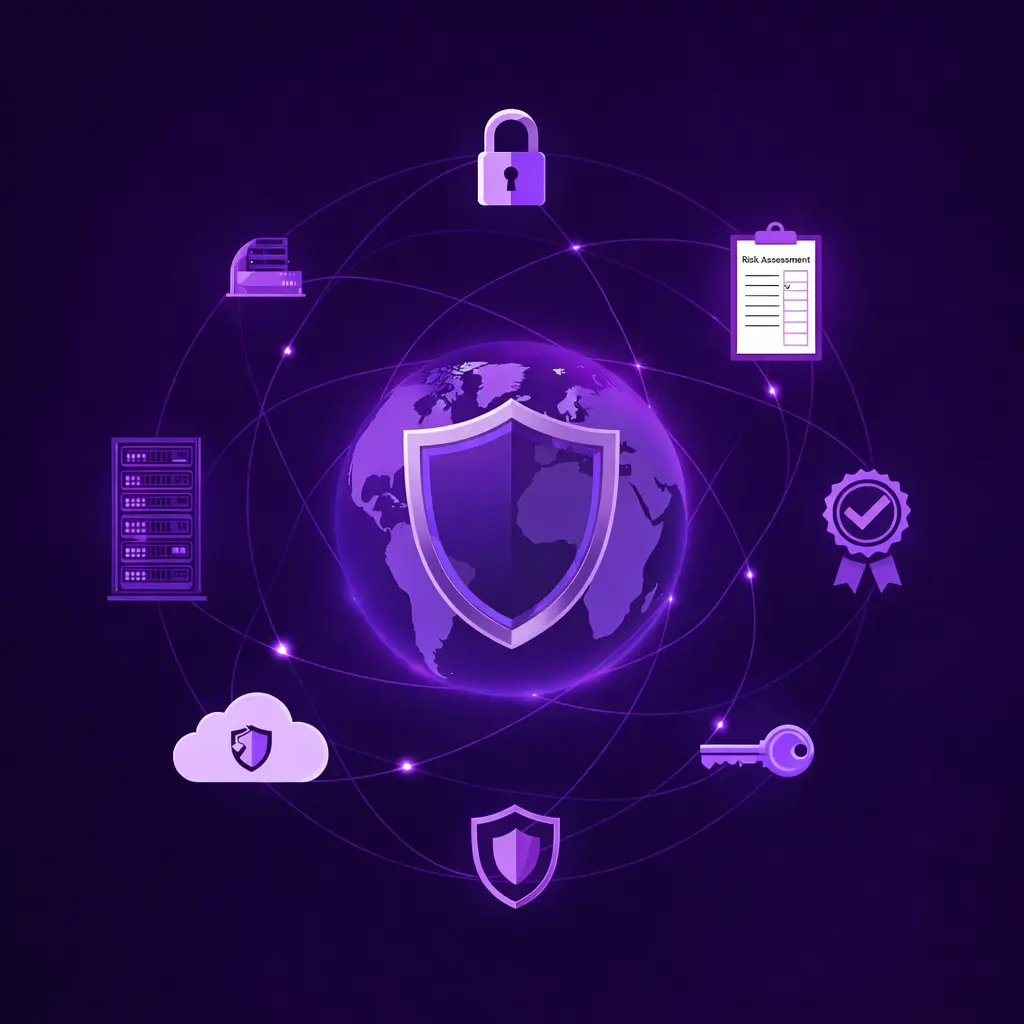
ISO 27001 information security illustration

Summarize and analyze this content with:

ChatGPT logoPerplexity logoGemini logoClaude logo

What is ISO 27001?

ISO 27001 is an international standard for managing information security. It provides a structured framework for organizations to protect sensitive data through an Information Security Management System (ISMS).

The standard helps businesses identify risks, implement security controls and continuously improve their security practices.

ISO 27001 applies to organizations of all sizes and industries, including SaaS, fintech, healthcareand enterprises handling critical or personal data.

Risk Assessment
Access Control
ISMS
Audit
Encryption
Continuity
ISO 27001 Logo

Who Does ISO 27001 Apply To?

Data-Handling Organizations

Organizations managing sensitive business or customer data.

Regulated Information Processors

Companies handling financial, healthcare or personal information.

Enterprise-Facing Businesses

Businesses working with enterprise clients requiring security compliance.

If your organization stores, processes or transmits sensitive information, ISO 27001 is highly relevant.

Key Principles of ISO 27001

ISO 27001 is built around core principles that ensure effective information security management:

Confidentiality

Ensure only authorized users can access data.

Integrity

Maintain accuracy and reliability of information.

Availability

Ensure data is accessible when needed.

Continuous improvement

Regularly monitor and enhance security controls.

Section 01

Rights of Stakeholders

While ISO 27001 is not focused on individual data rights like privacy laws, it ensures accountability toward stakeholders, including customers, partners and regulators. This builds trust and credibility across stakeholders.

  • Transparency in how information is protected
  • Assurance of strong security controls
  • Reliability in handling sensitive data
  • Confidence in business continuity and incident response
TRUSTTRANSPARENCYASSURANCEStrong ControlsRELIABILITY99.9%CONFIDENCEIncidentResponseRecovery ✓
Section 02

Obligations of Organizations (ISMS Responsibilities)

Organizations implementing ISO 27001 must follow a structured approach to security. These responsibilities ensure a proactive and structured approach to security.

ISMSRISK ASSESSMENTLowMedHigh12 risks identifiedCONTROLSAccess ControlEncryptionNetwork SecurityDOCUMENTATIONPolicies ✓AUDITSMONITORINGIMPROVEMENTPDCA
Section 03

Third-Party and Supplier Security

ISO 27001 emphasizes the importance of managing risks associated with third-party vendors. This helps reduce risks across the supply chain.

YOUR ORGVENDOR ASSESSMENTSecurityPrivacyComplianceAPPROVEDDATA PROTECTIONEncryptedMonitoredAuditedRISK MONITORINGLowMedHighCONTRACTSOKSLA ✓NDA ✓DPA ✓
Section 04

Incident Management and Response

ISO 27001 requires organizations to be prepared for security incidents. Effective incident management reduces damage and strengthens resilience.

IDENTIFY!T + 0hREPORTT + 1hRESPONDT + 4hLEARNResolvedINCIDENT LOG4 incidents resolved • 1 in progress • 0 critical
Section 05

Certification and Audit Requirements

To achieve ISO 27001 certification, organizations must undergo audits. Regular audits ensure continuous compliance and improvement.

ISO 27001CERTIFIEDINTERNAL AUDITEXTERNAL AUDITCertification BodyISMS VERIFICATION90%Controls: 93/114Policies: 12/12Ready ✓SURVEILLANCEYear 1Year 2Year 3Recertification →
Section 06

Risk Management and Continuous Monitoring

ISO 27001 is centered around ongoing risk management. This ensures that security evolves with the organization.

Risk RegisterTotal Risks: 5454Open: 32Closed: 22View ResultsVendor RiskManagementTotal: 2222Risky: 8Non-Risky: 14View ResultsDarkwebNo FindingsView ResultsRisk TreatmentTotal Risks: 540%Accepted Risks0 Risks2%Exempted Risks1 Risks0%Residual Risks0 Risks0%Mitigated Risks0 RisksView Results

Steps to Achieve ISO 27001 Compliance

1
Define the Scope of the ISMS
2
Identify and Classify Information Assets
3
Conduct Risk Assessments
4
Implement Security Controls
5
Develop Policies and Procedures
6
Prepare for Certification Audits
Step 1

Define the Scope of the ISMS

Define organizational boundaries, processes, and systems covered under your Information Security Management System.

ISO 27001

How Long ISO 27001 Actually Takes — And What Changes When It's Automated

These six steps are well understood by most security teams. What consumes the calendar is not the thinking — it is the collection, the chasing and the version control. Teams running ISO 27001 manually typically spend months assembling evidence, tracking control owners across spreadsheets, and rebuilding the same artefacts for the next audit cycle. With agentic automation, evidence is gathered continuously, control ownership is tracked as live tasks, and readiness becomes a state you maintain rather than a project you restart. See what a 28-day audit readiness path looks like, how manual audit prep compares with automated preparation, and how control ownership is tracked end to end.
a 28-day audit readiness pathmanual audit prepcontrol ownership is tracked

Outcome: Inserts the missing proof layer at peak implementation intent: evidence stays live, ownership is explicit, and readiness becomes operational instead of episodic.

Gap AssessmentAnnex A Controls93Ready: 68Pending: 25View ResultsEvidenceCollectionPoliciesAssetsSuppliersTraining89%CollectedReadiness83%Audit ReadyUpdated LiveImplementationTimelineWeek 1Week 2Week 3Week 4Week 55 Week Roadmap

Penalties and Business Impact of Non-Compliance

Data Breaches and Financial Losses

Weak security practices increase exposure to breaches, incident recovery costs and direct financial losses.

Loss of Customer Trust

Security failures can erode customer confidence and negatively impact retention and long-term brand value.

Failure to Win Enterprise Contracts

Without demonstrable security maturity, businesses may fail to qualify for enterprise procurement requirements.

Regulatory Consequences Under Other Laws

Inadequate controls may trigger legal and regulatory action under applicable privacy and security regulations.

Operational and Reputational Disruption

Incidents can disrupt critical operations and damage stakeholder trust across customers, partners and regulators.

Who Needs to Implement ISO 27001?

SaaS and Technology Companies
Fintech and Financial Institutions
Healthcare Organizations
Enterprises Managing Sensitive Data
Service Providers with Global Clients
Any Organization Handling Valuable Information
ISO 27001

One ISMS, Every Framework You'll Be Asked For Next

ISO 27001 is rarely the last framework a growing business is asked about. Enterprise buyers follow it with SOC 2, regulators follow it with privacy law, and each new request tends to restart the same evidence cycle. A single ISMS, mapped once and monitored continuously, lets one set of controls and one evidence base satisfy multiple frameworks — so the second certification costs a fraction of the first. Explore how multi-framework compliance monitoring works, where SOC 2 overlaps with your existing ISMS, and what your compliance programme should realistically cost.
multi-framework compliance monitoringwhere SOC 2 overlaps with your existing ISMSwhat your compliance programme should realistically cost

Outcome: Expands the entity graph from single-framework to multi-framework compliance planning and makes ROI visible before the next buying conversation.

ISO 27001Controls93 Controls ImplementedAccess ControlRisk ManagementAsset InventoryVendor SecurityIncident ResponseView ControlsEvidenceRepositoryReusable EvidencePoliciesRisk RegisterTraining RecordsSupplier Assessments94%Evidence CoverageFrameworkMappingMapped OnceReusable ControlsISO 27001SOC 2GDPRDPDPAFuture FrameworksOne ImplementationComplianceStatusSOC 2ReadyGDPRReadyDPDPAIn ProgressFutureAvailableUnified ISMS

Start Your
ISO 27001 Journey

Understanding ISO 27001 is the first step toward stronger information security. The next step is implementing the right processes, controls and systems to protect your organization effectively.

Not sure where to begin?

Assess your security readiness. Take the first step toward building a secure and trusted organization.

Frequently Asked Questions